When we talk about Georgians in Turkey, or the historical Georgian lands there, one name comes up again and again: Tao-Klarjeti. In an ordinary conversation, we may use it without stopping to ask which valley or region we mean. Then someone mentions Imerkhevi, Shavsheti or a particular village, and the geography becomes a little less clear.
Is Tao-Klarjeti one place, or two places put together? If Imerkhevi belongs to this wider world, does that make it part of Klarjeti? And when we hear about the famous monasteries of the region, how close are we to the villages of Imerkhevi?
These are reasonable questions. The names come from different kinds of geography: historical regions, political territories, church networks and the valleys people call home. Their meanings also change with the period and the writer. We can follow how they fit together without expecting every source to draw the same boundaries.
What Tao-Klarjeti means
At its most literal, Tao-Klarjeti joins the names of Tao and Klarjeti. They were distinct historical regions. Tao lay farther inland, in the middle and upper Chorokhi world; Klarjeti was associated with the Artanuji area and neighbouring valleys towards the lower Chorokhi. The compound can also be used much more broadly, for an interconnected historical and cultural landscape of southwestern Georgia, much of it within present-day northeastern Turkey.
The opening historical chapter of the 2011 collective monograph Shavsheti makes that broader usage explicit. Citing Ekvtime Taqaishvili, it applies Tao-Klarjeti to the Chorokhi basin and the upper reaches of the Mtkvari. It then discusses a historical division that names Shavsheti, Klarjeti, Tao, Nigali, Adjara, Samtskhe, Javakheti and other regions separately.
That is a useful starting point: a broad name can bring several regions into the same story while those regions retain their own identities. Calling the area Tao-Klarjeti does not require us to imagine that a resident of every valley lived in Tao or in Klarjeti in the narrower geographical sense.
This also helps explain the conversational usage. Someone may say “Tao-Klarjeti” while thinking of medieval churches, Georgian inscriptions, mountain villages and the history of Georgian speech in Turkey. The term gathers those associations together. To understand one place more closely, we still need the smaller regional names.
Where Imerkhevi fits
Imerkhevi is generally described as part of historical Shavsheti. It is a valley and local region within that larger setting, rather than another name for the whole of Tao-Klarjeti. Today its settlements lie in the Şavşat district of Artvin province in Turkey.
So it is reasonable to include Imerkhevi in a discussion of Tao-Klarjeti when the latter is being used broadly. For a more precise description of the valley, “Imerkhevi in historical Shavsheti” is usually more helpful.
Whether Shavsheti itself should be included under Klarjeti is a separate question. The authors of Shavsheti acknowledge that some scholars treat it as part of Klarjeti, but prefer a division that distinguishes the two. Older political and ecclesiastical territories, a writer’s broad regional vocabulary and a modern ethnographic description need not coincide. An older reference to Klarjeti therefore cannot always be translated straight into a boundary on a present-day map.
| Name | What it refers to | Relation to Imerkhevi |
|---|---|---|
| Tao | A distinct historical region farther inland in the Chorokhi basin. | Part of the wider regional history; Imerkhevi is not ordinarily located in Tao. |
| Klarjeti | A historical region associated with Artanuji and neighbouring valleys; its extent varies between usages. | Closely connected to Imerkhevi’s history, but not simply another name for the valley. |
| Shavsheti | The larger historical region in which Imerkhevi is generally placed. | The most useful immediate regional setting for Imerkhevi. |
| Imerkhevi | The valley and its settlements, now within Şavşat district. | The local landscape at the centre of this archive. |
| Tao-Klarjeti | The combined name of Tao and Klarjeti, also used for a wider historical and cultural area. | An appropriate wider frame when its broad meaning is made clear. |
A region at the centre of medieval Georgian history
The importance of Tao-Klarjeti is closely connected with the rise of the Bagrationi ruling houses and with the expansion of Georgian monastic life. Artanuji became an important political centre. In the early ninth century, Ashot I’s activity in the region helped create conditions in which settlement, patronage and church building developed together.
Across the following centuries, these southern territories played a major role in the political history that led towards a united Georgian monarchy. The familiar name “Tao-Klarjeti” can make the process sound tidier than it was. Different branches of the dynasty held different lands; their relationships and the extent of their power changed. A cultural region, a ruler’s possessions and a kingdom are related things, but they are not interchangeable.
Imerkhevi belongs in that history through Shavsheti and the wider network of valleys, churches, fortifications and communities. The evidence considered here does not establish it as a separate royal capital. Its importance can be approached more concretely: what was built there, how its settlements were connected, which names survived and how the valley’s people remembered the older landscape.
The medieval monasteries help explain why this area remains so prominent in Georgian cultural memory. Their work extended beyond the buildings. They supported the copying and transmission of texts, religious education, translation and literary activity. Giorgi Merchule’s Life of Grigol of Khandzta, written in 951, is itself part of that inheritance. It is also one of the texts through which scholars try to reconstruct the relationships between the monasteries.
The Twelve Monasteries of Klarjeti
The name you may have heard is the “Twelve Monasteries of Klarjeti,” also translated as the twelve hermitages or wildernesses. In Georgian the expression appears as კლარჯეთის ათორმეტი უდაბნო. Here “wilderness” belongs to the language of monastic retreat; it does not mean that these wooded mountain valleys were sandy deserts.
It refers to a remembered group of monastic foundations. A standard list discussed by Jaba Samushia includes Opiza, Khandzta, Shatberdi, Mijnadzori, Tsqarostavi, Baretelta, Mere, Daba, Parekhi, Berta, Jmerki and Doliskana. It is not a count of every church built in Klarjeti, and Samushia cautions against treating the expression as the name of an administrative unit.
The comparison with Ani’s “thousand and one churches” is helpful as a question about how places acquire memorable names. The history of each expression still has to be investigated on its own. For Klarjeti, the named monasteries, their texts and their identification on the ground give the discussion a particular historical basis.
There is enough here for a separate article: how the group was understood, which foundations are included in different discussions, what books they produced and which locations remain debated. That subject is explored in The Twelve Monasteries of Klarjeti, with historical photographs and an introduction to the individual foundations.
Where the famous churches are
A broad regional name can easily pull distant monuments into the same mental picture. Oshki, Ishkhani and Khakhuli belong to the wider Tao-Klarjeti story, but they are not churches in Imerkhevi. Oshki is at present-day Çamlıyamaç in Uzundere district; Ishkhani is in the Yusufeli area; Khakhuli is at Bağbaşı in Tortum district. Their geographical separation matters when we move from discussing a cultural region to visiting a particular valley.
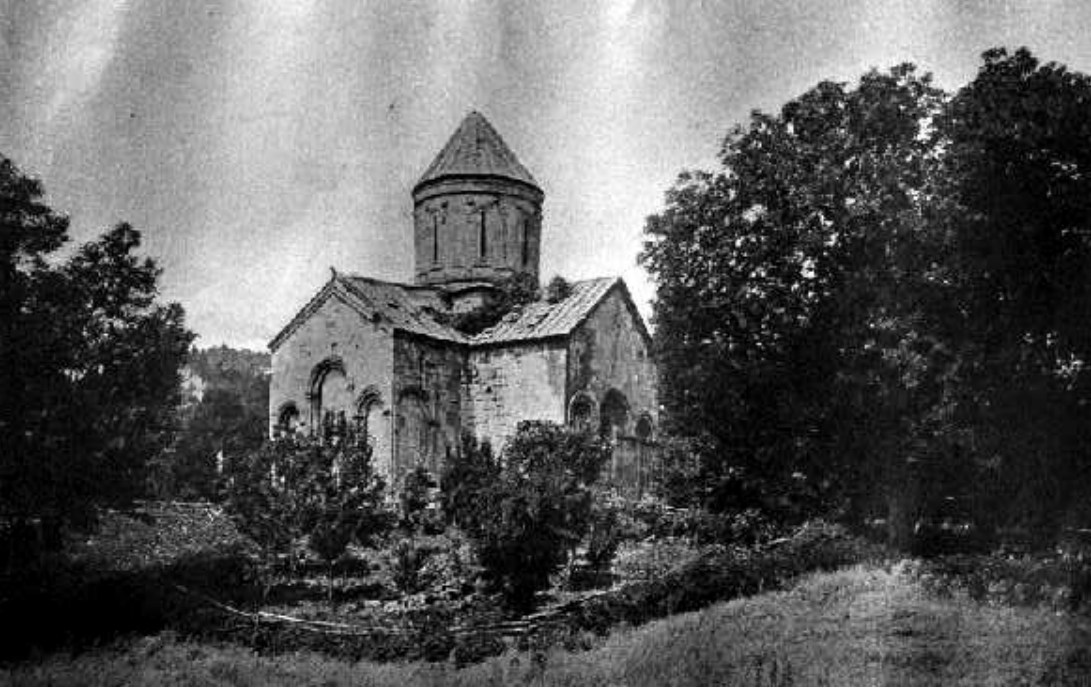
Closer to Imerkhevi, Tbeti is one of the clearest examples of a site with major regional significance. It lies at present-day Cevizli, in Şavşat district, within historical Shavsheti. It should be distinguished from Imerkhevi proper, even though it belongs naturally in an account of the valley’s wider historical surroundings.
The expedition volume describes Tbeti as an important episcopal and manuscript centre. Its foundation is associated with Ashot Kukhi in the early tenth century, while the surviving structure reflects several later building phases. The same report discusses its Gospel manuscripts, inscriptions and churchmen. This gives its importance a firmer basis than its size alone: it had institutional and literary roles in the region.
The churches inside Imerkhevi
There are also important remains within the valley itself. They are often smaller and less conspicuous than the best-known monuments of Tao. Their historical value lies partly in what they can tell us about the distribution of religious buildings among inhabited settlements.
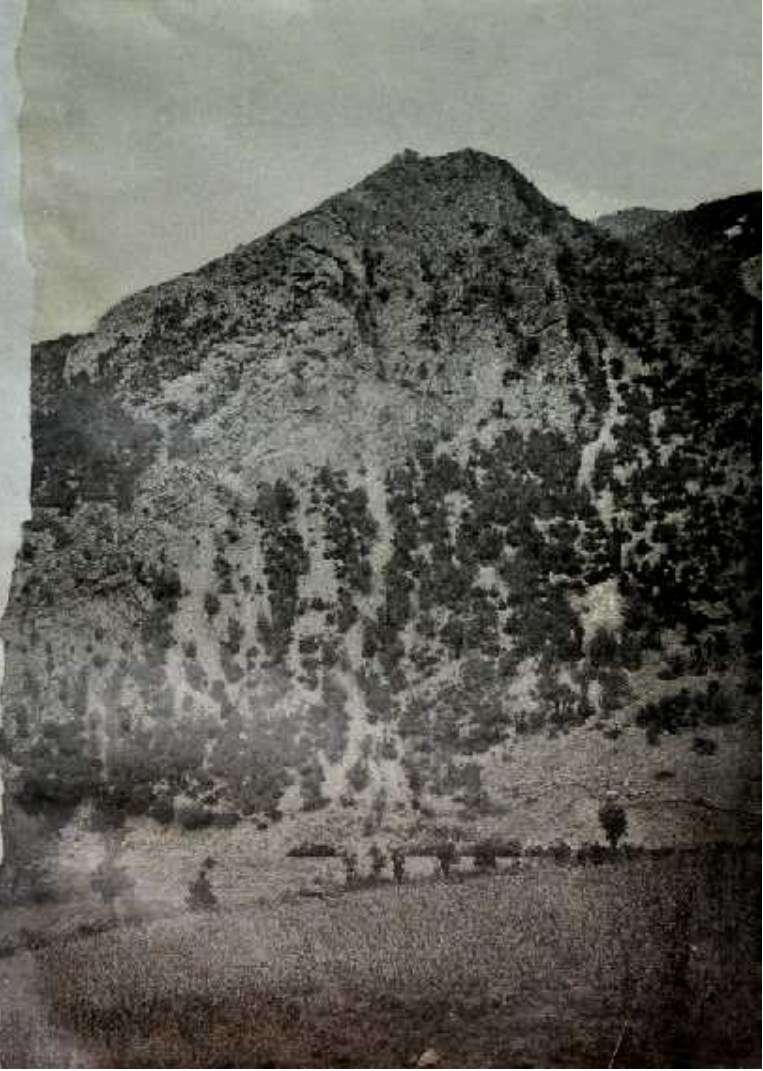
The 2015 expedition reports document Surevani’s church on a rocky rise above the right bank of the Imerkhevi river, near present-day Dutlu. Marr had described it in 1904. Comparing an older photograph and description with the later survey gives researchers a record of the building across time.
At Ube, now Oba, the expedition recorded more than one church site. Its description includes building stones reused in a boundary, mortar and a surviving portion of an apse. At Devadzeebi, in the Daba/Demirci area, it documented substantial parts of a damaged church and compared the local remains with Marr’s observations.
The same volume records a church within Tsepta’s fortress complex, in the Ustamisi/Eskikale area. That setting connects a religious building with the valley’s defensive landscape. Churches were not present only in secluded monastic retreats; they also stood among villages, agricultural land and fortifications.
These descriptions refer to the surveys’ dates, especially 2015, rather than a new inspection of the sites today. They nevertheless make it clear that Imerkhevi contains material worth studying and preserving. A partly surviving village church may be essential evidence for local history even when no famous author is securely associated with it.
The Khandzta question near Ube
One of the most interesting questions brings Imerkhevi directly into the discussion of the famous monasteries. Khandzta survives as a place name near Ube. Does it identify the monastery associated with Grigol of Khandzta? Scholars have given different answers.
In his 2011 fieldwork notes, Mamia Paghava describes visiting the place and investigating local accounts. He does not accept that the Ube name, by itself, locates Grigol’s monastery there. His discussion instead argues for Nuka-Saqdari as the historical Khandzta.
Roland Topchishvili’s 2013 study proposes a different reconstruction: Khandzta near Ube. It also discusses the widely adopted identification with Porta. These are competing arguments about historical geography, not three independently established locations for one monastery.
The Ube name deserves attention alongside the written itineraries and material evidence. It cannot settle the question alone. Equally, uncertainty about the famous monastery does not diminish the documented church remains around Ube. We can recognise their importance without assigning them a prestigious medieval name before the identification is demonstrated.
Daba and Mere also occur in discussions of the monastic landscape. Such names require particular care because ordinary geographical words can recur in several places. A modern settlement with a familiar name and a monastery mentioned in a medieval text need to be connected by evidence, rather than by spelling alone.
The people belong in this history too
It is easy to let the best-known monuments become the whole picture. On this website, however, Imerkhevi is also a place of villages, families, language, songs and everyday memory. The medieval Christian buildings form one important part of that story. Later Muslim religious life, Armenian neighbours, migration and the survival of Georgian speech belong to its history as well.
The sources themselves bring these worlds together. Marr’s diary records Muslim villagers talking about visits to older sacred places. The expedition book includes a Georgian religious sermon written in Arabic script in the Manatba materials. These records ask us to look at what people did with inherited languages, buildings and traditions over time.
Using “Tao-Klarjeti” for this wider world can help make the connections visible. Keeping the name Imerkhevi visible helps us stay close to the people and places at the centre of this archive. We can speak about the broader cultural region, then return to Shavsheti, to the valley, and finally to the village or household whose history we are trying to understand.
Related reading: Religion in the place names of Imerkhevi · What do sources say about Imerkhevians converting to Islam? · The Twelve Monasteries of Klarjeti.
Sources & image credits
Mamia Paghava and co-authors, Shavsheti (Tbilisi, 2011). Read the source. Printed pp. 8–9 (PDF pp. 9–10): the broad Tao-Klarjeti frame, the distinction between Shavsheti and Klarjeti, Imerkhevi’s regional position and Tbeti’s early history. The architectural and historical sections supply the wider setting. Their preferred regional division is identified here as an interpretation, rather than the only terminology ever used.
Mamia Paghava, Shavshuri Chanawerebi / Shavshian Notes (2011). Read the source. Printed pp. 51–68 (PDF pp. 27–35): the visit to the Khandzta-name locality near Ube, the author’s reservations about identifying it with Grigol’s monastery, and the argument for Nuka-Saqdari. The article distinguishes this view from Topchishvili’s proposal.
Tao-Klarjeti: Materials of the 2015 Expeditions (published 2016). Read the source. Pp. 41–43: Tbeti/Cevizli, its phases, episcopal role and manuscript culture. P. 57: Tsepta’s fortress church and the Ustamisi/Eskikale setting. P. 59: Surevani/Dutlu. P. 60: the Georgian sermon in Arabic script in the Manatba materials. Pp. 63–64: Ube/Oba and Devadzeebi in the Daba/Demirci area. These descriptions are dated survey evidence, not assertions that every remain survives unchanged today.
Niko Marr, Shavsheti–Klarjeti Travel Diaries, Georgian edition (2015), recording the journey of 1904. Read the source. Used alongside the later expedition descriptions for the local church landscape and pilgrimage traditions; printed pp. 224–225 (PDF pp. 113–114) record the Tetraketi account. The photograph of Tbeti is printed p. 428, fig. 2 (PDF p. 215); Surevani is printed p. 435, fig. 9 (PDF p. 219). Both photographs date from Marr’s expedition and do not show present-day conditions.
Roland Topchishvili, “On the Location of Khandzta Monastery and Some Questions of the Ecclesiastical Historical Geography of Shavsheti–Klarjeti” (2013), pp. 66–82. TSU repository record and abstract. Used for the author’s Ube proposal and the existence of competing identifications. The claim is attributed, not presented as consensus.
Jaba Samushia, “The ‘Sinai’ of Georgia or Twelve Hermitages of Klarjeti,” Pro Georgia 26 (2016). Journal volume. Used for the standard list of twelve and the distinction between a monastic expression and an administrative entity. D. Muskhelishvili’s Georgian Encyclopedia entry on Klarjeti also discusses the regional history and the twelve wildernesses. The short introduction here does not attempt to resolve all questions about the group’s membership and locations.
Modern place-name checks. The expedition volume supplies Cevizli, Dutlu, Oba, Demirci and Eskikale. For the wider Tao examples, see the Uzundere district authority’s Oshki/Öşvank description and the Artvin provincial culture directorate’s Ishkhani entry. These monuments are not placed inside Imerkhevi.
Scope. This is an introduction to the different regional names and their connections. Boundaries and political relationships varied over time. Medieval Christian cultural history, later religious change and the experiences of present-day communities are related subjects, each requiring its own evidence. The English text is an editorial synthesis, not a translation of one book.