Villages of Imerkhevi
Zakiyet / Yağlı
ზაქიეთი · Yağlı · Şavşat, Artvin
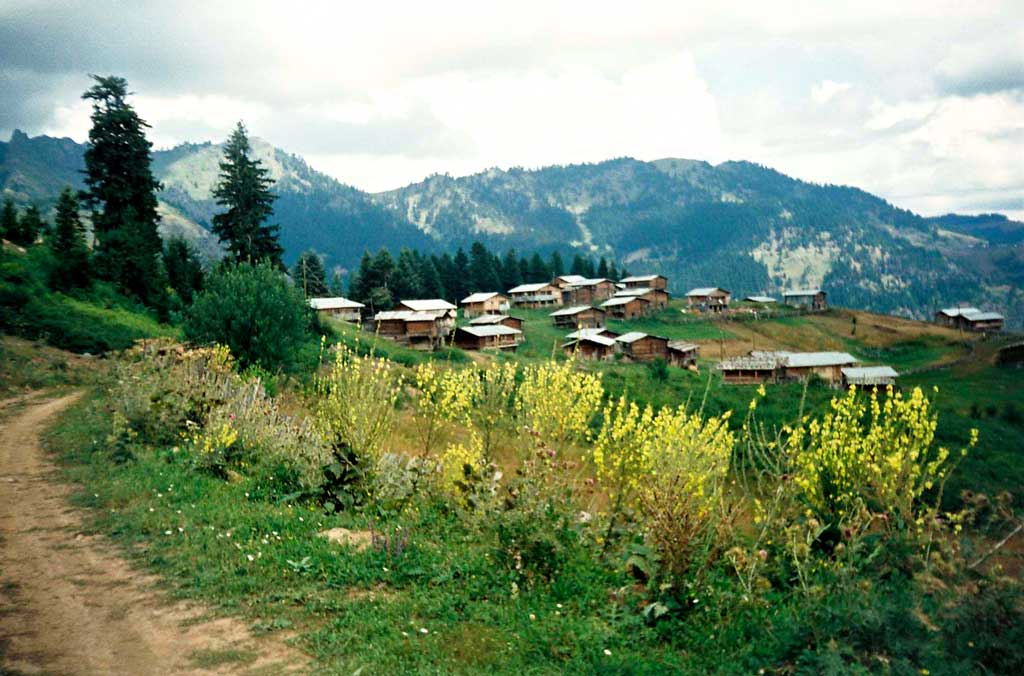
Zakiyet, officially Yağlı, is one of Imerkhevi’s Georgian-speaking villages. Its neighbourhoods, wooden houses and mountain pastures appear in travellers’ notes, population records and local memories. Vaketi is another name closely associated with the village, its seasonal settlements and its music.
Zakiyet · ზაქიეთი
Yağlı
36 households · 332 residents
14 records
Village names and location
Zakiyet appears in Georgian as Zaqieti (ზაქიეთი), with Zakiyeti and other Latin spellings used in different sources. Roland Topchishvili and Inga Ghutidze explain the name as the village of the Zakidze family. Yağlı is its official Turkish name, within the Şavşat district of Artvin.
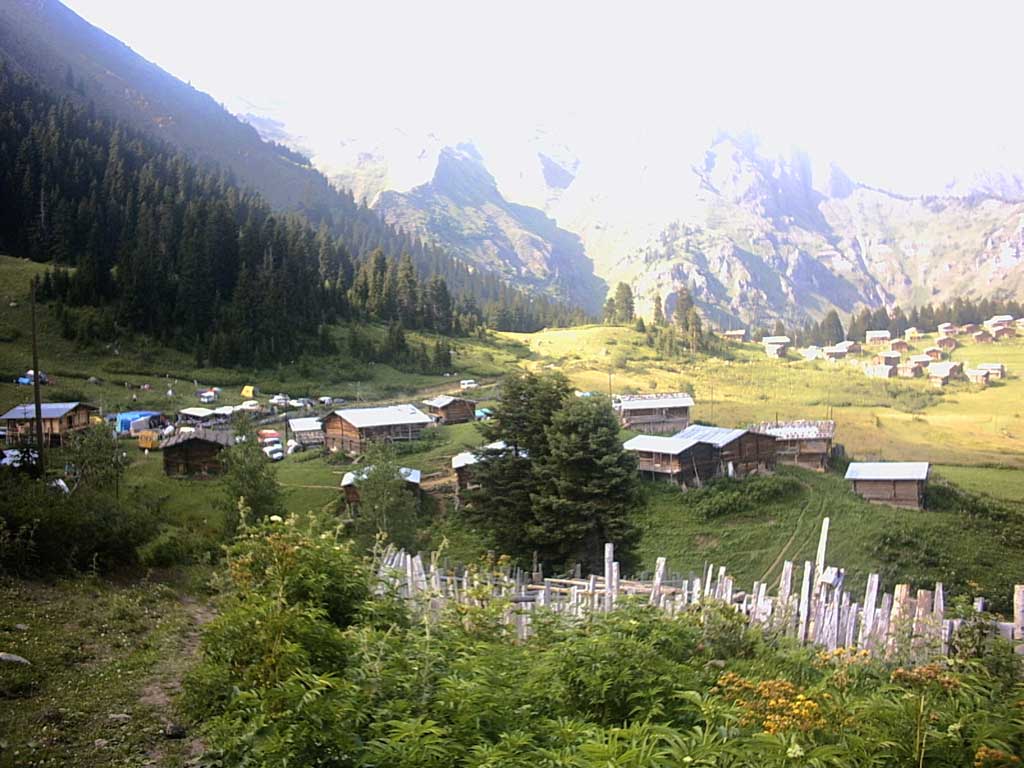
Vaketi (ვაკეთი), often written Vaket in Turkish, needs a little more explanation. In 1904, Niko Marr used the name for Zakiyet’s seasonal settlement on level ground above the village, distinguishing it from the summer pasture farther up the mountain. Later photographs and community usage associate Vaket more broadly with the village. Keeping both names visible makes it easier to follow the different sources without treating every reference as the same precise location.
Marr’s visit in 1904
Marr reached Zakiyet on the evening of 31 July 1904 after visiting Daba. His route passed through Baltieti, described in the diary as a neighbourhood of Khevtsvrili. The following day, 1 August, his notes turn to the Imerkhevian house: its wooden construction, rooms, balconies and the division between spaces for guests and the household.
He explicitly says that he photographed a house in Zakiyet. He explains where he stood with the host and his companion, near the guest entrance and the balcony beside the reception room. The house had more than one entrance, and its position on the slope mattered to the arrangement of the lower storey and the living spaces above. These observations give a rare view of how a particular building was used, rather than simply what it looked like.
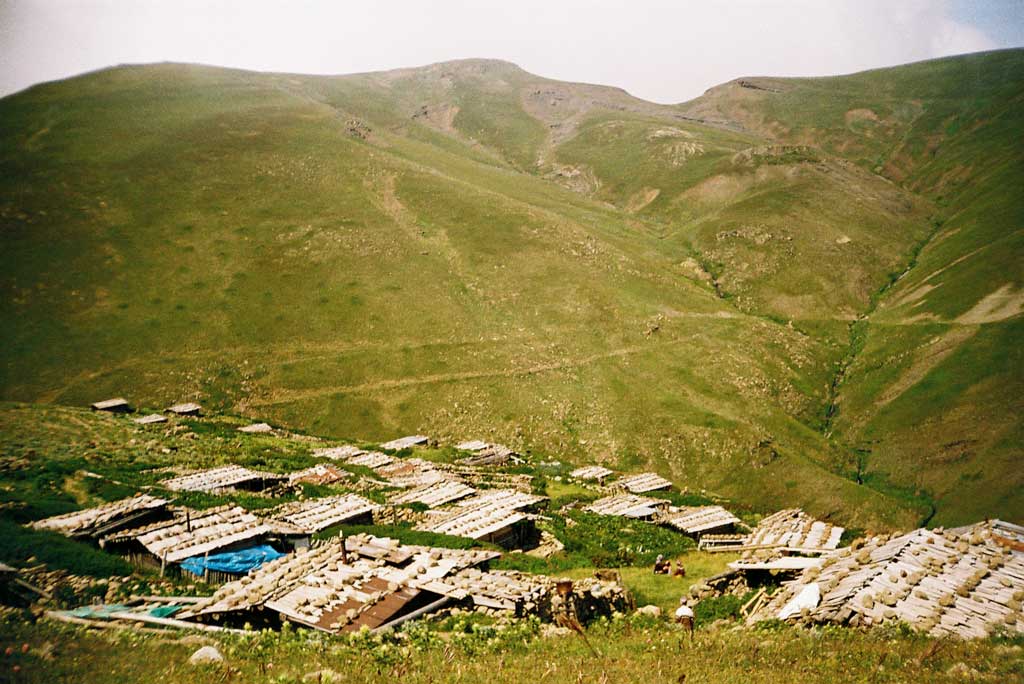
Heavy rain delayed his departure. Once the party set out, they climbed for about twenty minutes to a level pass where he placed Zakiyet’s seasonal dwellings, called Vaketi. Marr called this a mezre and distinguished it from the yayla on the mountain. The route then continued toward Badzgireti. His diary connects the houses of the village with a larger landscape of working paths and seasonal movement.
Population and historical records
The 1886 record reproduced by Topchishvili and Ghutidze gives Zakiyet 36 households and 332 residents, all classified in that source as Georgian. Their entry for the village in the 1910 administrative list gives 388 residents, described as Muslim Georgians, and also mentions a yayla with the same name.
| Year | Households | Residents | Source description |
|---|---|---|---|
| 1886 | 36 | 332 | Inhabitants classified as Georgian. |
| 1910 list entry | — | 388 | Muslim Georgians; separate census year not stated. |
The second number belongs to the authors’ entry under the 1910 list; the short entry does not state a separate census year for that count. These figures describe historical records and should not be read as the present population of Yağlı. They are kept with their dates and source descriptions rather than combined into a modern estimate.
Neighbourhoods and local place names
The village community website lists six neighbourhoods: Şobela, Çakvriyet, Came, Mikazeler, Dere and Misruat / Unyallar. The table retains those local names. Earlier sources use somewhat different names and groupings: Topchishvili and Ghutidze list Jarbidze and Chikiridze, while Paghava’s settlement table includes family-based groupings such as Chakuridzeebi and Jarabidzeebi.
| Neighbourhood | Source context |
|---|---|
| Şobela | Community neighbourhood list |
| Çakvriyet | Community neighbourhood list |
| Came / Cami Mahallesi | Community neighbourhood list |
| Mikazeler | Community neighbourhood list |
| Dere Mahallesi | Community neighbourhood list |
| Misruat / Unyallar | Community neighbourhood list |
The 2015 expedition publication also records a long list of small place names for Zakiyet, including Didgorti, Tskhaltashua, Kokolaseri, Kochobeti and Zenobani. Such names locate parts of the lived landscape more closely than a single village label can. The list alone does not tell us whether each is a field, ridge, stream or residential area, so they are not all presented as neighbourhoods.
Family names and connections
The surname document contains 14 records under Yağlı (Zakiyeti, Vaketi). These include Yapçinienti, Dabelienti, Çakvrienti, Hocienti, Mikazeler and Şobeliyenti. The table brings each recorded local name together with the Turkish surnames given in the same entry.
The document does not assign these fourteen entries to individual neighbourhoods. That connection remains open rather than being inferred from a similar-sounding place name. Georgian-script forms are editorial transcriptions of the source’s Latin spellings, included to make the collection searchable in both scripts.
Paghava’s older table adds a different layer of family history. It lists several Zakiyet groupings, including Unialebi / Turanoğlebi, and records an Ordu origin for that group. This is a reported connection from the book, not a basis for attaching every bearer of a present-day Turkish surname to the same ancestry.
| Local family name | Georgian transcription | Turkish surnames |
|---|---|---|
| Yapçinienti | იაპჩინიენტი | — |
| Dabelienti | დაბელიენტი | — |
| Ciroğlu | ჯიროღლუ | — |
| Pulvienti | პულვიენტი | — |
| Şabanienti | შაბანიენტი / ზეირალოღლუ | — |
| Koçobienti | კოჩობიენტი / ქოჩობიძე | Şahin · Doğan · Yıldırım |
| Napegvrienti | ნაპეგვრიენტი | — |
| Dzelienti | ძელიენტი | — |
| Çakvrienti | ჩაკვრიენტი | — |
| Hocienti | ჰოჯიენტი | — |
| Bzatelienti | ბზატელიენტი | — |
| Mikazeler | მიკაზელერ / ჯარბიზელერ / წმაჰიენტი / კატურეტი | — |
| Misratienti | მისრატიენტი / მაისურაძე / უნიალოღლუ | Turan |
| Şobeliyenti | შობელიენტი / შუბლაძე | Çetinkaya |
Swipe across the table on a small screen.
A dash means that the local name was not separately supplied. These are source records, not household counts.
Houses and seasonal life
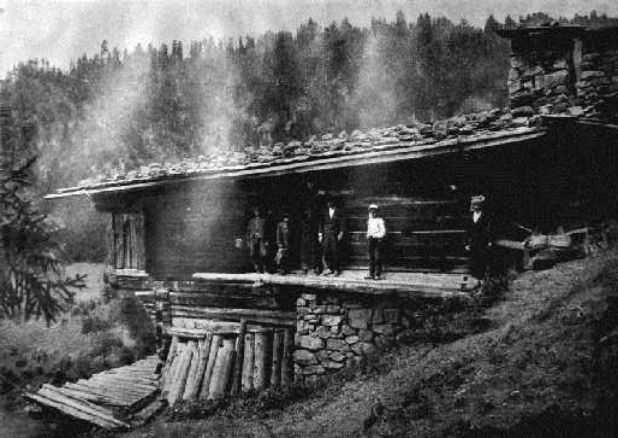
Marr’s house description begins with the practical arrangement of a mountain home: livestock below, living rooms above, stairs and a balcony connecting different spaces. His wider Imerkhevi account describes guest rooms, the hearth and a partly open upper space used for work during the warmer months. The Zakiyet photograph was one of his examples, but not every detail in that regional description can be assigned to every house in the village.
The historical illustration below is reproduced from the 2015 edition of his diary. Its plate caption identifies an Imerkhevian house without naming the village, so it is shown as a regional comparison. It is not labelled as the securely identified Zakiyet house mentioned in the text.
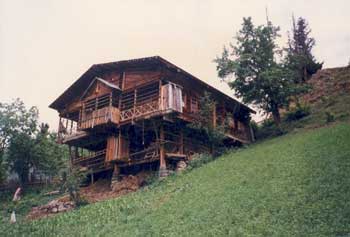
The recent community archive shows the continuing importance of wooden buildings and mountain settlements. Its photographs include houses, pasture settlements and winter scenes, often under the name Vaket. The contributors and posting dates are recorded where available; the dates when the photographs were taken are generally not supplied.
Shushana Putkaradze’s Chveneburebis Qartuli also preserves a Badzgireti account that names Zakiyet’s yayla as Didveli. Read alongside Marr’s distinction between Vaketi and the higher yayla, it reminds us that one village can have several named seasonal places. The book’s publication in 1993 is not treated as the date when the account was recorded.
Georgian speech in Zakiyet
Zakiyet has a particularly memorable place in Marr’s language notes. During a thunderstorm he asked what the sound was, then asked a speaker about the stream behind the house. He used the answers to compare two consonants that he heard as distinct in the local Georgian speech. The little exchange turns weather and a nearby watercourse into linguistic evidence.
The speaker explained a distinction between a small watercourse, called a ghele, and a larger khevi. Marr also recorded vocabulary for cattle, including the young animal called a dekeili in his transcription. His notation reflects the scholarly practice of his period; the observations are historical evidence, rather than a full description of how every generation speaks today.
Another Zakiyet speaker used Marioba and Tavkvetiloba when discussing the season of snowfall. Marr was interested in the survival of older calendar terms in Muslim Georgian speech. These expressions show how seasonal knowledge and inherited vocabulary could remain connected even as religious life changed.
Songs and remembered customs
The village’s community archive presents the Vaket song, also called Çift Jandarma, as part of its musical heritage. Its local account links the song with Vaketi and seasonal celebrations. That account is presented as community tradition, not as a separately verified reconstruction of the events behind the song.
Paghava’s Shavsheti preserves another kind of musical memory. In 2005 the researchers recorded a rainmaking verse from 66-year-old Şaaziye Aytekin, identified in the book with the local family name Chakvridze. She remembered taking part as a child and emphasised that the words were sung. The recorded version mixes Georgian and Turkish elements, asking for rain and naming the food collected during the ritual.
This account gives us a named participant and a collection date, rather than an anonymous statement that “people used to do this”. It is evidence of a remembered practice; it does not establish that the ritual continues today. The same book includes a fog-clearing formula recorded from a Zakiyet resident in 2005.
Zakiyet also appears above Daba and Devieti in a song of longing for Badzgireti recorded in several Imerkhevi communities. Its place in those verses belongs to the shared geography of the region’s songs, alongside the more specifically local Vaket tradition.
Historical figures, local accounts and image descriptions retain their source context. The house plate is labelled as a regional comparison because its caption does not identify a village. Photo posting dates are not assumed to be capture dates.
- Mamia Paghava et al. — Shavsheti (2011)
Family groupings, songs and named speakers’ accounts, including the 2005 rainmaking verse. - Niko Marr — Shavsheti and Klarjeti travel diaries (2015 edition; journey 1904)
Journey of 31 July–1 August 1904; house description and speech notes. The house plate in the 2015 edition, figure 21, is captioned only as Imerkhevian. - Roland Topchishvili & Inga Ghutidze — Historical place names in Russian documents (2019)
1886: 36 households, 332 residents. Entry under the 1910 administrative list: 388 residents; a separate census year is not given there. - Shushana Putkaradze — Chveneburebis Qartuli, Book I (1993)
Badzgireti passage naming Zakiyet’s yayla as Didveli, PDF264. The publication year is not a confirmed recording date. - Teimuraz Khutsishvili et al. — Tao-Klarjeti 2015 expedition reports (2016)
Zakiyet’s small place names, PDF185. These are not all classified as residential neighbourhoods. The tower at the river confluence on PDF66 is not reassigned to Zakiyet. - (Hakan) Gaffar YILMAZ / Temur KATAMADZE — Georgian villages and family lineages in Turkey, update 8 (2026)
All 14 Zakiyet entries; no individual neighbourhood assignment. Georgian-script spellings are editorial transcriptions. - Şavşat community archive — Zakiyet / Yağlı
Carousel: Gülben Yazıcı, posted 26 October and 2 November 2006; Zekeriya Gümüş, posted 29 December 2006. Wooden house: Özcan Çetinkaya, posted 10 August 2004. Contributors are as listed; posting dates are not capture dates. - Zakiyet community website — Mahallelerimiz
Six neighbourhood names; this is a community account rather than a verified current administrative register. - Zakiyet community website — Türkülerimiz
Local Vaket / Çift Jandarma tradition; linked for further reading. Lyrics and recordings have not been copied.
Photo credits
- Zakiyet / Vaket community view — Zakiyet / Vaket community view. Gülben Yazıcı; posted 26 October 2006. Capture date not supplied.
- Zakiyet Yaylası — Zakiyet Yaylası. Gülben Yazıcı; posted 2 November 2006. Capture date not supplied.
- Vaket panorama — Vaket panorama. Zekeriya Gümüş; posted 29 December 2006. Capture date not supplied.
- A historic Imerkhevian house; exact village unidentified — Historic Imerkhevian house, Marr’s travel diaries, 2015 edition, figure 21. Regional comparison: the plate caption does not identify the village.
- Wooden house in the Vaket community gallery — Wooden house in the Vaket community gallery. Özcan Çetinkaya; posted 10 August 2004. Capture date and precise location not supplied.
A living archive. An ongoing conversation.
Documenting Imerkhevi through language, places, songs and shared memories.
Created by Ömer Faruk Bülbül · Sources & image credits