Villages of Imerkhevi
Jvariskhevi
ჯვარისხევი · Sebzeli · Şavşat, Artvin
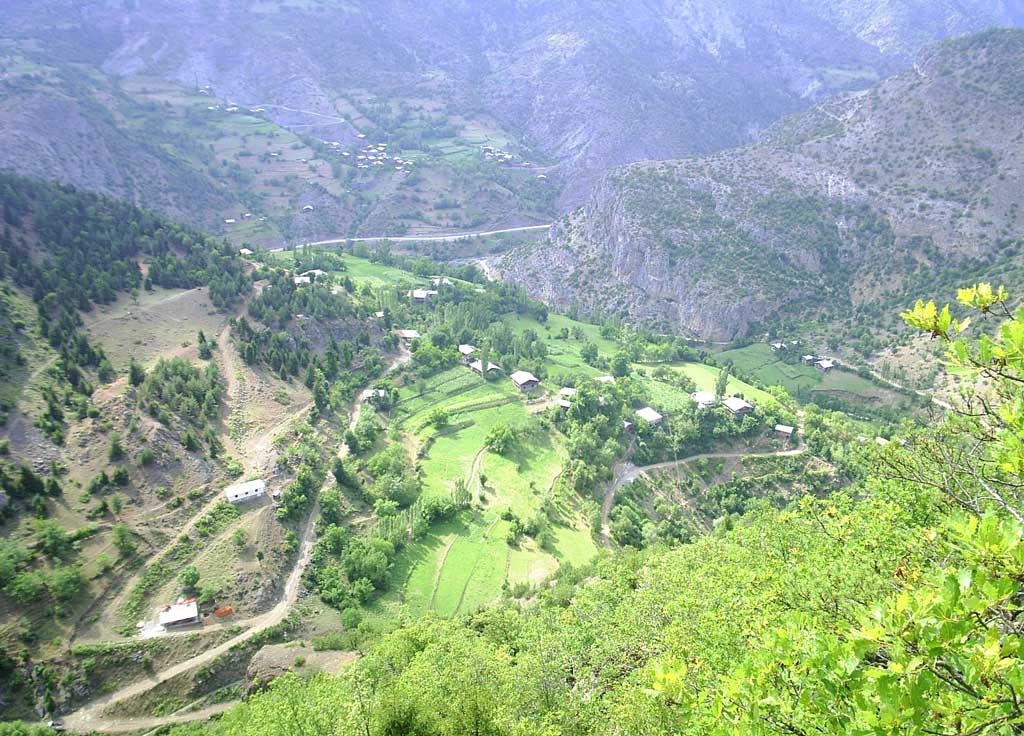
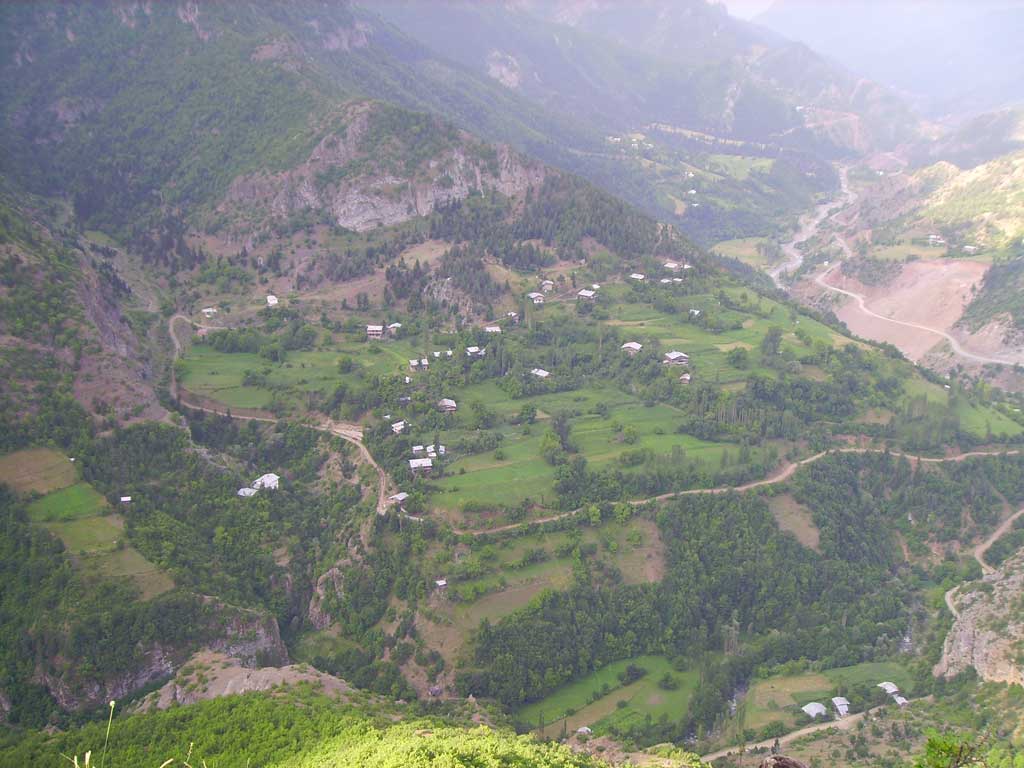
Jvariskhevi, now known as Sebzeli, is a Georgian settlement in Imerkhevi whose history is closely connected with Surevani and the neighbouring communities. A stone bridge, recorded place names and conversations preserved by field researchers reveal different parts of its past—and explain why it has not always appeared as a separate village in official lists.
Jvariskhevi · ჯვარისხევი
Sebzeli
Under Surevani · not a separate total
12 records
The village name
The Georgian name ჯვარისხევი, Jvariskhevi, combines jvari, “cross”, with khevi, “ravine” or “river valley”. The shorter form Jvarkhevi also occurs, while Turkish-language sources use spellings such as Cvarishevi and Carishev. Sebzeli is its present Turkish name. These forms refer to the settlement discussed here; similarly named places elsewhere should not automatically be identified with it.
Local explanations can preserve a different understanding of a name. In the conversations published in Shavsheti, a speaker relates “Juari” to a man’s name and mentions the stream below. This is valuable as a recorded explanation, but it does not establish the village’s founder or replace the transparent Georgian word formation.
History and changing village boundaries
Jvariskhevi belongs to the historical landscape of Shavsheti, which passed under Ottoman rule in the sixteenth century. The area came under Russian administration after the war of 1877–1878 and became part of Turkey in the settlement of the borders in 1921. Within that wider history, the smaller administrative relationships matter just as much: Jvariskhevi could retain its own name and community while being counted under another village.
When Niko Marr travelled through Imerkhevi in 1904, he described Surevani as a group of six mehle, or settlements/neighbourhoods. His list included Surevani itself, Daviteti, Parnukhi, Kutaleti, Jvariskhevi and Chakvelta. He placed Jvariskhevi lower down across the river and Chakvelta higher on the mountain. The editors of the 2015 Georgian edition draw attention to this terminology: places with their own identities could be grouped around Surevani as an administrative centre.
Later sources give a different arrangement. Paghava and colleagues list Jvariskhevi, Tskaltbila and Otklde together under one local administrative group. A Turkish local-history account dates Sebzeli’s separation from Dutlu to 1997. That date is reported by the secondary account; the underlying administrative decision has not been checked here. The page therefore treats Jvariskhevi as a distinct place while making its former connections visible.
Population: what the records actually count
There is no single uninterrupted population series for Jvariskhevi in the sources examined. The nineteenth-century figures often belong to Surevani as a larger unit. Keeping the unit beside the number avoids assigning a combined village total to present-day Sebzeli.
| Year | Households | Residents | Source description |
|---|---|---|---|
| 1886 | 72 | 453 | Surevani: combined village unit, not Jvariskhevi alone |
| 1886 | 16 | — | Jvariskhevi component: households reported by the local-history account |
| Fieldwork published 2011 | 14 / 5 | — | Separate remarks about households remaining; seasonal observations, not a census |
The 1886 total of 72 households and 453 residents belongs to Surevani, including its associated settlements; it is not a separate count for Jvariskhevi. The historical source classifies the residents as Georgian. The local-history account separately reports 16 households for the Jvariskhevi component, but its estimate of about 100 people is a calculation rather than a recorded headcount and is not reproduced as census data.
Much later, the village conversations in Shavsheti describe people leaving for winter. One passage speaks of fourteen households remaining and another of five. Those remarks are not equivalent census totals: they record seasonal residence and personal observations at particular moments. They are useful evidence of how the village was lived in, rather than a basis for a modern population figure.
Neighbourhoods and related settlements
The table distinguishes historical administrative connections from place names recorded within or around the settlement. It is not a complete register of today’s neighbourhood boundaries.
| Source | Place name | How recorded |
|---|---|---|
| Marr, 1904 | Surevani · Jvariskhevi | Jvariskhevi within a six-part administrative grouping |
| Paghava et al., 2011 | Jvariskhevi · Tskaltbila · Otklde | Settlements listed together under one administrative group |
| Surname document, 2026 | Sebzeli (Otklde, Cvariskhevi) | Combined heading; individual family locations not specified |
| Community photo archive | Ulukent | Neighbourhood name in image captions; boundaries not independently mapped |
The expedition’s place-name collection also records Tskaltbila, Naphudzari, Kvabikari, Tsikhisqeli, Vake and other local names under Jvarkhevi / Sebzeli. A field name, a former settlement and an administrative neighbourhood are different kinds of place; their appearance in the same collection does not make them equivalent.
Family names
The surname collection uses the combined heading “Sebzeli (Otklde, Cvariskhevi)”. Its twelve records are shown below with that scope preserved. The document does not assign each family to Jvariskhevi or Otklde separately, nor does it supply a confirmed Turkish surname for these particular entries.
The Georgian-script forms are editorial transcriptions of the source’s Latin spellings. They help readers search across scripts, but they are not independently verified historical spellings. Similar-looking forms such as Ganakoti and Gankotu remain separate source entries until their relationship can be established.
| Local family name | Georgian transcription | Turkish surnames | Neighbourhood | Notes |
|---|---|---|---|---|
| Lezgiyenti | ლეზგიენტი | — | — | — |
| Penkriyenti | პენკრიენტი | — | — | — |
| Harzuenti | ჰარზუენტი | — | — | — |
| Turmaniyenti | ტურმანიენტი / თურმანიძე | — | — | — |
| Topçiyenti | ტოპჩიენტი | — | — | — |
| Ganakoti | განაკოტი | — | — | — |
| Kavazienti | კავაზიენტი | — | — | — |
| Sapiyenti | საპიენტი | — | — | — |
| Davitiyenti | დავიტიენტი | — | — | — |
| Usupiyenti | უსუპიენტი | — | — | — |
| Ğarzuyenti | ღარზუიენტი | — | — | — |
| Gankotu | განკოტუ | — | — | — |
Swipe across the table on a small screen.
A dash means the source gives no confirmed Turkish surname or record-level neighbourhood. Records retain the combined Sebzeli / Otklde heading; Georgian-script spellings are editorial transcriptions.
Seasonal residence and daily life
The recorded conversations move between school, relatives, roads, health and the practical question of who stays through winter. An elderly speaker explains that she leaves in winter because of her health; elsewhere the discussion turns to a daughter at school in Şavşat and to marriages within the surrounding communities. These details show connections between the village and the district centre without reducing village life to permanent residence alone.
Islam Torun, another speaker in the village section, recalls a much larger number of cattle in earlier times and says that only one ox remained. His rounded recollection is not a livestock census, but it conveys a remembered change in agricultural life. The same passage records a rich vocabulary of fields, slopes and landmarks, including Titvela Seri, Shavkvabebi, Satredo, Vakeebi and Kaklebi.
Georgian speech in Jvariskhevi
Jvariskhevi is included in the Georgian-speaking settlements surveyed by Paghava and colleagues. The book preserves connected speech rather than only isolated words: family relationships, winter departures and everyday requests appear in the local variety of Georgian. Turkish loans and phrases occur alongside Georgian grammar, reflecting the speakers’ bilingual lives.
The village section identifies one speaker as Zulfet Gieteli, aged 82. Her words include a direct identification of parents and grandparents as Georgian, as well as comments about schooling and remembering. This is evidence from the period of the recordings, not a claim that every generation in the village has the same command of Georgian today.
Songs and oral traditions
Tina Shioshvili’s folklore records provide another perspective on the village. The contributor notes identify Zulfet Gunes, aged 80, in Jvariskhevi, including a short verse recorded on 6 August 2005 about missing Badzgireti after an absence of two days. Its subject is a neighbouring village: a useful reminder that songs and verses circulate through visits, marriages and family connections.
The collection also records beliefs and spoken formulas associated with the evil eye from a contributor of that name in 2009. These belong to the documentation of local oral tradition. Their presence does not mean that all inhabitants shared the same beliefs, and they are not presented as medical advice. The differing surname forms and ages in the linguistic and folklore contributor notes have been retained rather than silently merged into a single biography.
The stone bridge over the Kvirala
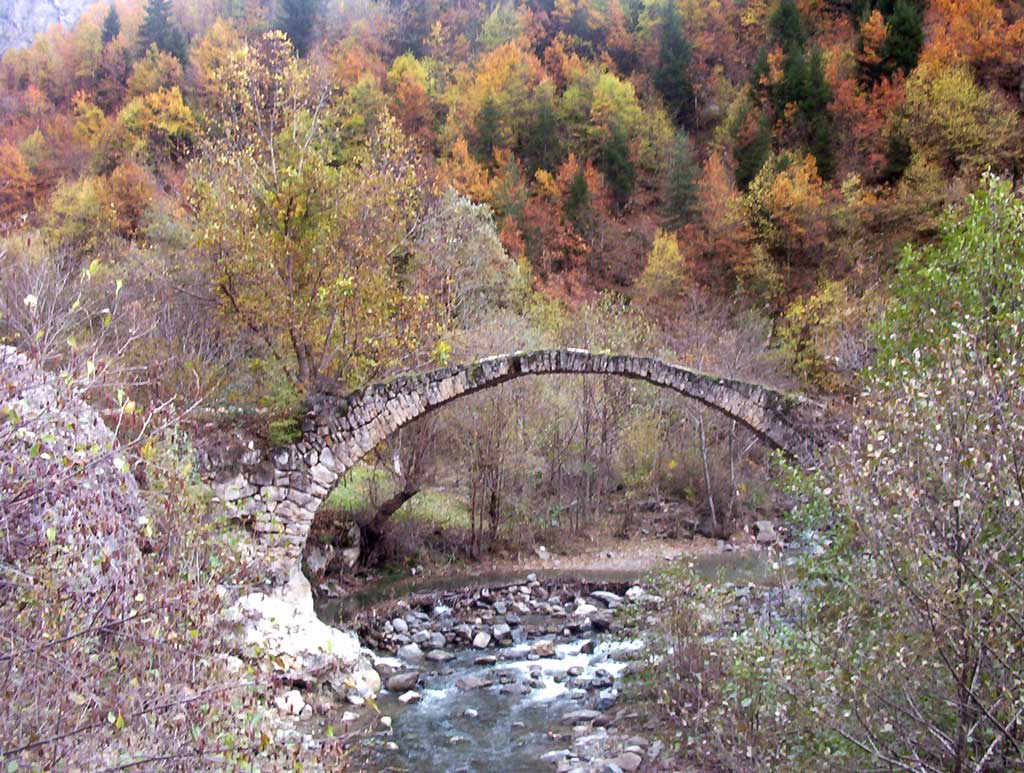
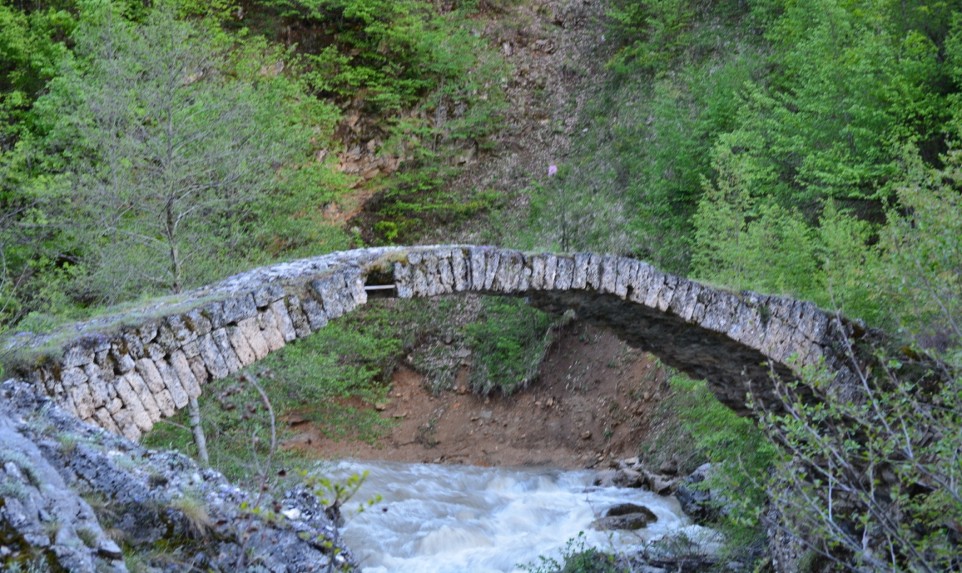
The most clearly documented monument near Jvariskhevi is the stone arched bridge over the Kvirala. The 2015 expedition report locates it about 1.3 kilometres north-east of the main settlement and records the local name “Tamar’s Bridge”. That traditional attribution is part of the bridge’s cultural history; it does not by itself establish a construction date or identify its patron.
The photograph below accompanies the Jvarkhevi bridge entry in the report of the 2015 expedition. Its precise capture date is not separately stated. It shows the single stone arch in its river setting. The publication does not identify an individual photographer for this image.
Names attached to nearby monuments can also shift. The expedition describes a fortress at Chakvelta / Şenocak and notes that some earlier publications call it the Jvariskhevi fortress; it is also known as Bara Castle, linked with the historical settlement of Bora. The different names are worth recording, but they should not be used to move the fortress into Sebzeli or to confuse it with the bridge.
The main text draws on the sources below. Historical groupings are kept distinct from present-day village identity. Community image dates are posting dates unless stated otherwise; contributors are credited as listed, without assuming they were the photographers.
- Mamia Paghava et al. — Shavsheti (2011)
- Niko Marr — Travel Diaries: Shavsheti and Klarjeti (Georgian edition, 2015)
- Roland Topchishvili & Inga Ghutidze — Historical place names in Russian documents (2019)
- Teimuraz Khutsishvili et al. — Tao-Klarjeti 2015 expedition reports (2016)
- (Hakan) Gaffar YILMAZ / Temur KATAMADZE — Georgian villages and family lineages in Turkey, update 8 (2026)
- Şavşat community archive — Carisxev / Sebzeli
- TAO-KLARCETİ — Cvarishevi: local historical overview (2020; updated 2024)
Photo credits
- Jvariskhevi / Sebzeli — Jvariskhevi / Sebzeli. Archive contributor: Özkan Gökçe; posted 15 September 2006. Capture date unknown.
- Ulukent, as identified in the community gallery — Ulukent, as identified in the community gallery. Contributor: Özkan Gökçe; posted 21 August 2008. Capture date unknown.
- The arched bridge in winter — The arched bridge in winter. Archive contributor: Mesut Kılıç; posted 17 December 2006. Capture date unknown.
- Jvariskhevi bridge over the Kvirala — Jvariskhevi bridge over the Kvirala. Report of the 2015 expedition, Khutsishvili et al. (2016). Exact capture date and individual photographer not specified.
A living archive. An ongoing conversation.
Documenting Imerkhevi through language, places, songs and shared memories.
Created by Ömer Faruk Bülbül · Sources & image credits