Settlement archive
Tskaltbila
წყალთბილა · Jvariskhevi / Sebzeli · Şavşat, Artvin
Today’s status
Tskaltbila is recorded within the Jvariskhevi/Sebzeli landscape, not as a separately verified modern administrative village. The 2015 expedition’s place-name index lists it under Sebzeli. Its exact present-day boundaries, permanent households and whether the name denotes a residential cluster or a smaller locality remain unverified. There is no basis here for declaring it abandoned. [E, p. 194]
Checked 18 October 2026
A small name within Jvariskhevi
The Shavsheti monograph groups Jvariskhevi, Tskaltbila and Otkilde together in its account of the Georgian-speaking settlement landscape. The later expedition index supplies the modern anchor Sebzeli and lists Tskaltbila alongside Otklde, Tavbululi, Napudzari, Kvabikari and other local names. Together these records give the locality a documented regional context without establishing an independent village administration. [P, p. 37; E, p. 194]
The name is worth keeping visible because village-level labels can obscure smaller places remembered by residents. Its presence in a linguistic list and an expedition index is stronger evidence for the name itself than for a precise boundary on today’s map.
The wider valley and its bridge
The expedition documents a stone arched bridge over the Kvirala River near Sebzeli, about 1.3 kilometres northeast of the main settlement. Residents called it Tamar’s bridge. The name records local tradition; it does not independently date the bridge to Queen Tamar’s reign. [E, pp. 32–33]
The photograph is included as wider Jvariskhevi/Sebzeli context. The report does not call it Tskaltbila’s bridge or locate Tskaltbila beside it. Likewise, the settlement name alone is insufficient evidence for a working thermal bath or medicinal spring.
Families at the right geographical scale
No Tskaltbila-specific surname register was found. The 2026 compilation lists Lezgiyenti, Penkriyenti, Harzuenti, Turmaniyenti/Turmanidze, Topçiyenti and other names under Sebzeli/Otklde/Cvariskhevi as a whole. These are useful parent-community references, but the source does not assign them to Tskaltbila. [F, p. 10]
The monograph’s grouping also reflects the linguistic situation observed by its researchers, not a test of every resident’s Georgian today. Separate household interviews and a local map would be needed to connect particular families, houses and field names securely.
Photographs & source documents

Source document: Tskaltbila listed under Jvariskhevi / Sebzeli, entry 277. Expedition report (2016), p. 194.
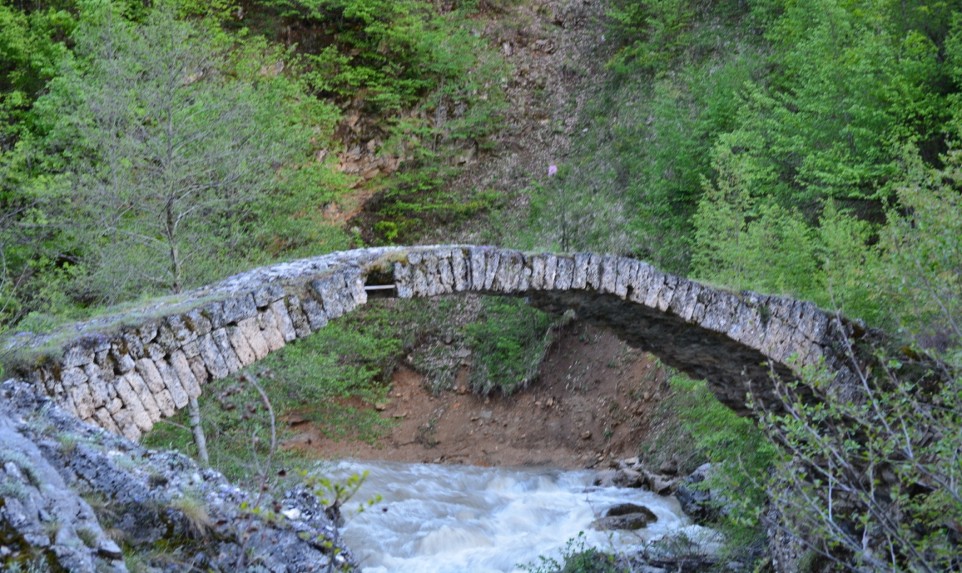
Wider Sebzeli context: the bridge over the Kvirala, not an identified Tskaltbila site. 2015 expedition report (2016), pp. 32–33.
A living archive. An ongoing conversation.
Documenting Imerkhevi through language, places, songs and shared memories.
Created by Ömer Faruk Bülbül · Sources & image credits