Phikiuri / Rabati
Today’s status
Paghava identifies Pkhikiuri / Pkhikuri with the roadside Rabati neighbourhood of Dasamobi. It is treated here as a historical settlement name within the Dereiçi / Dasamobi area, not a separately verified modern administrative village. A source index also places a similarly named locality near Şenocak; this alternative locator should not be silently conflated with the Dasamobi identification.
A roadside quarter and a historical village
In Paghava’s account, Brili and Pkhikiuri are the lower parts of the Dasamobi cluster, while Nioleti and Davlati lie above. He gives Rabati as another, newer name for Pkhikiuri. The historical-name study records Pkhikiuri both as a village in earlier records and among Dasamobi’s neighbourhoods. Village and neighbourhood can therefore describe the same named community at different times. [1, pp. 159–163; 2, pp. 15–16]
The Armenian community in dated records
The 2019 study, drawing on the 1886 material, reports 32 households and 139 Georgian-speaking Armenian residents in Pkhikiuri. For 1907 it records 99 Armenian inhabitants. These historical classifications and dates should be retained; neither language nor a modern national category should be used to erase the community’s recorded Armenian identity. They are not present-day population figures. [2, pp. 15, 44]
Crafts, trade and remembered church sites
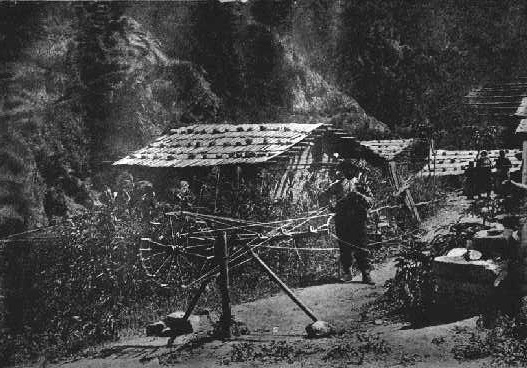
The historical photograph of a textile worker adds a human dimension to the settlement’s craft history. Paghava discusses Rabati as a place associated with commerce and reports residents pointing out where an Armenian church had stood. A remembered site is not the same as an excavated or securely dated surviving building. The neighbouring Dasamobi profile provides further context on pottery and the wider settlement cluster. [1, pp. 161–163]
Photographs & source documents
Related places
- M. Paghava, Shavshuri Chanawerebi (2011), pp. 159–163
- Topchishvili & Ghutidze, Shavsheti–Klarjeti historical place names (2019), pp. 15–16, 44
- Khutsishvili et al., Reports of the 2015 Research Expeditions to Tao-Klarjeti (2016), place-name index, Phkikuri entry
- Niko Marr, 1904 Travel Diaries, Georgian edition (2015), p. 439, fig. 13
A living archive. An ongoing conversation.
Documenting Imerkhevi through language, places, songs and shared memories.
Created by Ömer Faruk Bülbül · Sources & image credits