Settlement archive
Khozabari · Khozabiri · ხოზაბირი
ხოზაბირი / ხოზაბარი · Yanıklı · Artvin Merkez
Today’s status
Khozabiri is a quarter of Yanıklı in Artvin Merkez, not a separately verified modern village in Şavşat. The 2015 expedition states that relationship explicitly. A Forestry Directorate report of 12 June 2026 confirms an active village community and forestry work in Yanıklı, but does not identify a Khozabiri-only permanent population. The quarter’s habitation should not be inferred from the condition of its church remains. [E; S]
Checked 18 October 2026
Names across the sources
The directory spelling Khozabari corresponds to Khozabiri in the sources; Paghava also records Khodabiri. The historical place-name study includes Khozabiri among Chikhiskhevi’s quarters. The 2015 expedition report locates it within Yanıklı in Artvin Merkez and discusses it under historical Klarjeti. These overlapping regional descriptions should be kept visible rather than flattened into a single administrative label.
Marr’s route and the church remains
Marr’s 1904 diary describes a difficult approach from Mukhobani, along a narrow passage above the Imerkhevi valley. His church record provides an earlier point of comparison for later researchers. In 2015, the expedition team found a fallen wall fragment and small pieces of tufa in a field about 250 metres north of the settlement. Their report contrasts these remains with the church Marr had seen.
An inscription known through a photograph
The expedition report discusses an inscribed stone previously photographed by Osman Aytekin. On the basis of that photograph, the inscription was dated to the tenth century. Its reading includes a prayer to Christ and a tentatively identified name, Ashot. The stone’s subsequent history is reported through local testimony, so the surviving photograph and the researchers’ qualifications matter as much as the proposed reading.
The landscape preserved by small names
The expedition’s inventory preserves Darbaztsqali (დარბაზწყალი), Qiauri (კიაური), Daritavi (დარითავი), Satleturi (სათლეთური), Korkhati (ქორხათი), Nagubari (ნაგუბარი), Dzaghlauri (ძაღლაური), Gagulati (გაგულათი), Saqdari (საყდარი) and Klditavi (კლდითავი) under Khozabiri. These are landscape names, not an independently verified list of family surnames.
They are a useful complement to the church account: the locality’s record includes fields, water and routes as well as a monument. The expedition photograph belongs to the 2015 survey and should not be presented as a recent photograph of the whole neighbourhood. [E, pp. 134, 193]
Families and recorded surnames
The 2026 compilation gives the following names for Yanıklı/Chihishevi as a whole. It does not allocate them to Khozabiri. They are included as the parent village’s family context, not as a claim that each lineage lives in this quarter. No separate Khozabiri surname register was found in the reviewed material. [F, pp. 2–3]
| Lineage / household name | Recorded surname(s) |
|---|---|
| İhtiyaroğlu | Çelik |
| Çaçğaladze | Avcı |
| Dumbadze | Düzcan |
| Mamaladze | Gümüş |
| Katamadze | Gül |
| Kindzinidze | Altun |
Photographs and source documents
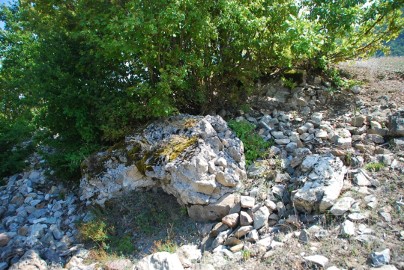
Khozabiri church remains in Yanıklı, documented in 2015. Expedition report (2016), p. 134.
A living archive. An ongoing conversation.
Documenting Imerkhevi through language, places, songs and shared memories.
Created by Ömer Faruk Bülbül · Sources & image credits